
needlepointUS.com


...World-class Needlepoint at Discount Prices    1-888-801-3084


Click here to receive our free newsletter

Most Recent Additions

Add this page to favorites

Send this Page to a Friend

Quicklinks
All Items
Most Recent
Recommended
Accessories
Animals
Bell Pulls
Beth Russell
Children
Christmas
Collection d'Art
Counted Cross
Stitch
Cushions & Pillows
Elizabeth Bradley
Famous Paintings
Gift Cards
Glorafilia
Hand Painted
Canvases
Judaica
Lady & the Unicorn
Lamps & Magnifiers
Leigh Designs
Margot de Paris
Men
Miniatures
New Items
Royal Paris
Rugs
Sale Items
Sandra Gilmore
Scroll Frames
SEG de Paris
Stockings
Tapestries
Trubey Designs
Under $100
Valentines

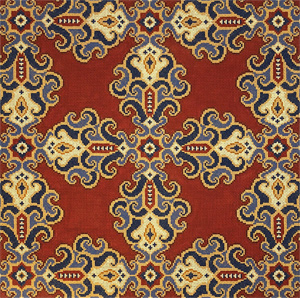
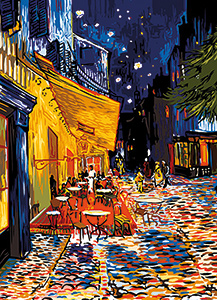
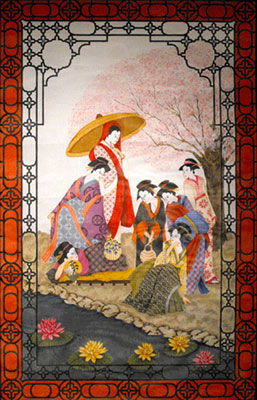
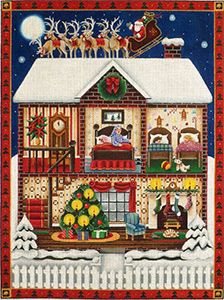
From the SEG de Paris Collection.
Click on any item for more details.


You've found it!

High Quality needlepoint canvases and kits from Europe and hand-painted American needlepoint canvases and kits.  Somewhere on this site is a breath-taking piece that is perfect for your next needlepoint project.  Take a breath, take your time and choose from some of the world's best designers and manufacturers.  We have spent the better part of 40 years gaining this information and developing relationships with these most renowned European and English designers and manufacturers, and now we open that door to you.  It's a wonderful world of stitching delight, very satisfying to the eyes, the fingers and the soul.  We hope you enjoy your visit with us.  Here is a brief introduction to some of the works you'll find here:

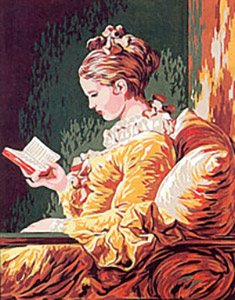
SEG de Paris - Medium Canvases - Marie Antoinette
Margot de Paris - Small Canvases - The Lighthouse
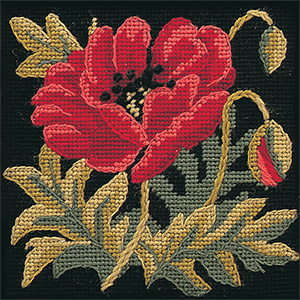
Margot de Paris (Coquelicots) Poppies Small Canvas


We've made it as easy as possible for you to find a project worthy of your time and talents.  Here, in one place, there are around 2,000 of the best quality, highly detailed and exquisitely beautiful needlepoint canvases and kits from England, France and Greece, and hand-painted canvases from some very talented US artists, including Christmas needlepoint.

Start by selecting from the menu in the upper left corner of this page.  Choose to browse everything, or click on the "categories" button for more concise choices.

One of the best features of this site is its search capability; just type a word describing what interests you in the panel above the "Search" button to the left, and begin your adventure!  Everything here has been priced below retail, so you can't make a mistake.  If you have any questions or special interests, give us a call at 888-801-3084 and we'll be happy to help.  ENJOY!!!


Some useful information...from the latest newsletter

Newsletter Spring 2009

(In this issue:  Needlepoint History, Some Suggestions, Helpful Hints, New Items, and Vacation Suggestion)


Dear fellow stitchers:

Welcome to Spring!  In our part of the country the temperatures are edging into the 80's and everything is blooming.  It's a beautiful sight (if you don't suffer from allergies).  And, as usual, I'm not nearly finished with all the needlework projects I wanted to finish during the winter.  So much stitching I want to do, and so little time!

But we've taken the time to put together some useful and interesting information for this Spring issue of our newsletter, so grab a cup of coffee or tea, sit back for a minute and enjoy a short break with these needlepoint nuggets.

Some needlepoint history:


The roots of needlepoint go back thousands of years to the ancient Egyptians who used small slanted stitches to sew up their canvas tents. There are also many references in the bible to elaborate needlework on religious articles, including the tent used for worship in ancient Israel.

In the Middle Ages, there were two types of needlework that were forerunners of modern needlepoint. A kind of embroidery, in 13th century Europe, was done on coarsely woven linen fabric similar to canvas mesh. Tapestries, also popular in that era, were woven on vertical threads on a loom. In the 16th century, people began to imitate these forms on a canvas background using steel needles, invented around this time. This allowed more intricate work than the fishbone or thorn needles used previously.

During the times of Mary, Queen of Scots (who did needlepoint during her long imprisonment), needlepoint was a pastime of the leisure class. Some of Queen Mary’s needlepoint can be seen in the Victoria and Albert Museum in London. As time went on, its appeal gradually broadened to other parts of society.

There are few examples of needlepoint from early Colonial America since American women had little time to spare for stitching that was not absolutely practical. With an increase in leisure time, along with the invention of a method of printing colored charts for needlepoint designs (called Berlin Work), needlepoint finally took its rightful place in style.

Some needlepoint suggestions:

Needlepoint offers a wide range of avenues for self-expression; pictures, pillows, seat cushions, or other items to decorate your surroundings.

When working from a chart, try to work from the right-hand corner from one block of color to another.

It is advisable to work the design first then the background. This will help your design to stand out from the background and be the focus of the piece.

We suggest that you use a frame when stitching, but this is a personal choice. There is no question that the finish is better and a more even tension is achieved, but if you are more comfortable working without a frame , that is fine.

Keep the back tidy; there are two simple reasons for this. First, having lots of ends hanging at the back can eventually make it difficult to get your needle through the canvas. Second, the work will lie flatter when it is made up. So cut your threads short when you have anchored them.

When framing a needlepoint picture, we never use glass. Nor would we put glass on an oil painting. These deserve to be enjoyed as textured and interesting pieces, not flattened and diminished behind glass.

To keep needlepoint pictures clean, just flick over with a feather duster. Ideally, needlepoint should not be in a smoky atmosphere.

Needlepoint can be Scotch-Guarded and we strongly recommend that you do not try to wash it. Take it to a good dry cleaner’s instead.

Helpful Hints:

Always keep extra needles on hand. All needles wear. If your needle turns dark, try a platinum or gold needle. It is your own body chemistry causing this.

Let the needle dangle in the back every so often to get the twist out of your thread. It makes for better work and easier stitching.

Never leave knots on the back of your canvas. They can produce bumps that will show on the front.

When ripping out stitches, do not reuse the unstitched thread. It will be worn and look different if re-stitched.
 

New Items

We've added many new items since our last newsletter.  You will want to see the newest SEG de Paris canvases.  Besides the new Vermeer at the top of this newsletter, there are several other new canvases of classic art pieces, including a Renoir,  a classic of Marie Antoinette, The Cage by Francois Bouchet, a Modigliani, and more.

There are two ways to get a quick look at our new items.  First, there is a new link on the front page called "Most Recent Additions."  You'll find it on the left side of the page.  This shows a single page listing of our most recent additions, but is limited to the one page.

The other is by using the menu.  The menu in the upper left hand corner of every page has a pop-out function.  Place your mouse pointer over the word "Categories" and then over the "New Items" button and click.  This will bring you to an expanded listing of our newest items.  If you don't like using the menu, you can also click on the list of links to the left of every page.

A vacation suggestion:

Most of us who are addicted to needlepoint will always take along a project or two to work on even while we're on vacation.  If you'd like something conveniently sized for that purpose, visit our Miniatures section for some summer ideas.

As always, don't forget that it's never too early to start on a Christmas project.  Follow this link to some ideas.

Thanks for reading, and happy stitching!

Kindest regards,

Janice Lindsey
Needlepointus.com

Newsletter Winter 2008-9  (Click here to receive our next issue...all free of course)

(In this issue:  Needlepoint Basics, new services, new items, and some Christmas ideas.)

Dear fellow stitchers:

OK, we know we're a little late with this issue.  For some of you it's turning Spring already.  Here in Florida the mocking birds are at it nearly in full force, and we're seeing some blooms on the azaleas.  Green is coming out all over.  But, this is our Winter Newsletter, and we'll try to make it worth your while to read.  Before we get to the good stuff, we want to shamelessly remind you that we have been adding new items right along to our website at NeedlepointUS.com.  OK, enough of the self-promotion for now...here's something we think you'll want to see on...

Needlepoint Canvas Basics

Count or mesh size: This is expressed in units per inch. #18 count or 18 mesh means there are 18 warp threads and18 weft threads per linear inch.
Single mesh: This means the canvas is woven like fabric and one canvas thread is carried at a time.
Double mesh: This means that the canvas is woven like fabric and two canvas threads are carried at a time. Penelope is the only double mesh canvas still being made today.
Interlock: Weft threads are twined around the warp threads so that the warp and weft threads are locked together. The result is canvas that does not ravel. Cotton interlock canvas, and silk or polyester gauze are interlock examples.
Warp: The lengthwise threads in canvas.
Weft: The crosswise threads in canvas.
Woof: A synonym for weft.
Selvage: The left and right woven sides of a width of canvas or fabric.

Always put the canvas on the working frame so that the warp is lengthwise to you and the weft runs from left to right, or sideways. The warp is stronger than the weft.

Mono woven canvas is made of polished, stiffened, thick cotton fibers. The word “mono” means one.  It is a single-mesh, and comes in 3 ½, 10, 11, 12, 13, 14, 16, 18, and 22 threads to the inch.

Interlock canvas is made of polished, stiffened, slightly thinner cotton fibers. It consists of a single woof thread and with a double warp thread twining around each single woof thread. It is available in 5, 7, 9, 10, 12, 13, 14, and 18 to the inch versions.

Penelope, or Berlin, canvas is made of stiffened cotton fibers. It is double-mesh, and occurs in 5, 6 ½ , 7½ , 10, 12, 13, 14, 16, 18, and 20 to the inch. It’s purpose is for petit point (detail on faces, flowers etc), gros point, and as a base for beads. Penelope mesh size is expressed in dual numbers, such as 10/20, with a forward slash between the two numbers indicating 10 gros point stitches to the inch and 20 petit point stitches to the inch.  Quick point will pull less and the stitches will be more square if Penelope is used. Penelope was the type of canvas on which original Berlin work was done during the 19th century. Penelope is the canvas of choice for pillows, chair seats, purses, bell pulls and pictures.

Queen Mary, one of the patrons of the Royal School of Needlework, was photographed doing petit point on Penelope canvas. Our Royal Paris, SEG de Paris, Margot de Paris and Collection d’Art collections are all on Penelope canvas.

New Services

We don't get them often, but once in a while someone is either new to needlepoint or in a hurry to have the finished product, and some have asked if we can stitch the piece(s) for them.  The good news is, YES, now we can do exactly that.  If that is something you might want done, please call me at 888-801-3084 and we can discuss it.

New Items

We've added many new Margot de Paris canvases, a completely new line of hand-painted needlepoint from a very talented designer at Leigh Designs.

If you like the Beth Russell collection, there are two new pieces that you'll at least want to see.  Beth has combined the entire Henry Dearle Greenery Collection into one canvas with a massive design of 63x26".  It's called the Henry Dearle Complete Tapestry and definitely worth a look.  The other is also a huge new tapestry based on the William Morris Forest Collection.  This design measures 14x42" and is called the Forest Trio Tapestry.  We think you'll be as breathless as we were when we first saw them.  These are heirloom pieces fit for any home.

There are also six new Beth Russell Miniatures that Beth has added to her lineup, including the Bee, Butterfly, Caterpillar, Grasshopper, Ladybird (Ladybug), and Snail Miniatures, all taken from her new Rose Garden Collection.

For those who have requested counted cross stitch items, we have added several new pieces to the Maia Collection.  These are really world-class kits.

Christmas Ideas

As always, don't forget that it's never too early to start on a Christmas project.  Follow this link to some ideas.

Thanks for reading, and happy stitching!

Kindest regards,

Janice Lindsey
Needlepointus.com


Newsletter Fall 2008  (Click here to receive our next issue...all free of course)

(In this issue:  )


Dear fellow stitchers:

Well, it’s finally fall…at least now that we have some cooler weather, it does seem like fall. And what a great time of the year to begin stitching on our projects for the colder months. It is the perfect time to begin the Holiday stitching projects, and we have many new and wonderful items available for your gift giving or for gifting yourself. When you have some spare time, please revisit our website at NeedlepointUS.com and see the new lines we’ve added. What wonderful and exquisite heirlooms we can create for our families and friends.

As usual, I have some interesting (at least in my opinion) tidbits and history for you. The following is a short history of canvas work in England. I hope you enjoy it as much as we enjoy bringing it to you.

In the sixteenth century, the Elizabethans started to adapt the designs of the medieval tapestries to canvaswork by working pictures in tent stitch (Half Cross, Continental, Basketweave) using silks, wools and metal threads. Turkey work (wool knotted on a canvas ground and cut into a pile effect) to give a hard-wearing luxury fabric, was one of the first techniques to be adapted by English needle workers of the sixteenth century. The fabric was used to drape over long, plain oak tables and cupboards and for upholstering chairs. Contemporary inventories reveal that even large houses only had one or two chairs, kept for the master of the house and important guests. The rest of the household would have sat on wooden benches - hence the large number of cushions, frequently embroidered on fine canvas, which also appear on the household lists of the period. Square cushions would have been used on chairs, long cushions on benches and window seats. This spilled over into the churches, and today many English churches we have visited are provided with hand-stitched needlepoint cushions and prayer bench covers.

Tent stitch, with its strong construction covering every thread of canvas, was introduced at this time to simulate the expensive imported woven tapestries. Because of the inherent strength of this stitch, many pieces from this period have survived. The great houses would have had at least one professional needle worker, probably a man, who would work the large pieces and prepare and help the ladies of the house with the smaller pieces. Young girls were trained to embroider both as a practical skill and social accomplishment. Their standards were so high it is often difficult to decide whether the work is from the needle of a professional or amateur. I feel sure this is the case with all of the pieces you stitch.

In this English tradition, the Beth Russell collection of cushions is superb. Every detail is exquisite and a joy to stitch. These are true heirloom-quality English designs at their finest, many adapted from William Morris designs.

Also from England we have the Glorafilia designs. These designs are much beloved in the United States.

In the Glorafilia line there are several items with a wonderful history in the design: The Marbled Cushion for example is designed from the beautiful craft of paper marbling adapted by the Venetians. The glorious colors come from leaf pigments and “secret ingredients” which are combed and brushed into spirals of color and then transferred miraculously onto paper where they ebb and flow in extraordinary combinations of tones. The Marbled Cushion is stunning and will please everyone who sees it stitched…truly a work of art!

New Additions to NeedlepointUS.com:

Maia Counted Cross Stitch:  For those who have requested some high quality counted cross stitch items, we have added the exquisite Maia collection from England. This line is for those of you that LOVE counted cross stitch at it finest. The designers in this series include Karl Bang, Keith Mallett, Monica Stewart, Nel, Kawase Hasui, and Erte’ . These are the most exciting kits offered for cross stitch. One of my favorites is Winter’s Majesty. Even if you do not cross stitch, these kits are some of the best gifts for someone who loves this type of needle art.

Collection d'Art:  New from Greece:  In our effort to continually bring the best of the best to you we have also added another needlepoint selection from Greece. The Collection d’Art is new to us but the beauty of these designs is timeless. You will want to see the Collection d’Art version of the most famous painting of all, the “Mona Lisa.” Please enjoy looking at these as they are very beautiful and very reasonably priced.

Sandra Gilmore collection:  This new addition features hand-painted canvas designs by the renowned painter and designer Sandra Gilmore.  There are many new Christmas items in this collection, along with other designs with delightful detail and color.

Judaica:  New Judaic items from various designers, all hand-painted.

Trubey Designs:  Hand-painted canvases made in the USA.

We are adding more items almost daily, so be sure to check back often.

Remember too that we are here to help you select your next gift or should we say heirloom, and to answer any questions.

Enjoy your fall weather and again remember it is never too early to start stitching for the gift-giving season.

Janice Lindsey
Needlepointus.com

Summer 2008 Newsletter  (Click here to receive our next issue...all free of course)

Dear fellow Stitchers:

Now that summer has arrived it is a good time to enjoy sitting outside or inside stitching some lovely pieces to enjoy through the winter.  Many needlepoint kits are wonderful for vacation travel and that needed quiet time to relax and enjoy creating heirlooms.  This is also a good time to think about holiday projects.

For Travel we recommend Beth Russell kits and Glorafilia kits as they come with a tote bag to keep all your stitching items in one easy location. (I actually know customers that stitch while waiting in traffic, airports, and at the beach).  We now offer the exquisite Maia Counted Cross Stitch kits that are beautifully packaged and are also a good take-a-long project.


Tapestries (continued from last issue)

As promised in our last newsletter, I wanted to acquaint you with some of the background on the world of tapestries which have influenced many of the canvases and kits on NeedlepointUS.com.  Our knowledge of the origin and history of medieval tapestry has been thoroughly updated in the last few years, following a certain number of discoveries that have focused attention on both economic and stylistic factors.

The technique was indeed an ancient one, but from the mid 14th to the 15th century production was constantly on the increase. Initiated by a policy of the Duke of Burgundy, who was anxious to replace a cloth industry beset by competitors with a new luxury, semi-luxury, or even common industry.  Trade and sales were encouraged by bankers, important entrepreneurs and even the markets.

Manufacturing centers were so diverse that it is hard to pinpoint a piece’s origin when not confirmed by documentation.  The major centers were Arras, Lille, Tournai, and above all Brussels, which took the lead in the 16th century in terms of quantity and quality; but there were also home industries under subcontract to workshops unable to meet demand.

Weavers were willing to go from one workshop to another, from one town to another, either through personal choice or in answer to a specific demand for labor. 

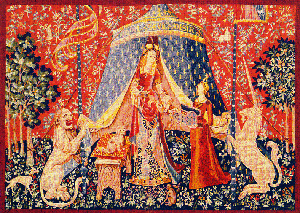
Tapestry fell primarily within an industrial context of mass-production, where rapid turnover was a decisive element in its success.  But there were also commissioned works, arranged by verbal or written agreement between the purchaser and the manufacturer or merchant.  They can be recognized from their individuality, often worked by coats of arms (Lady with the Unicorn).   As a rule, a tapestry was completed in three stages:  first the model maker drew a preliminary design on a reduced scale that might then be colored; next the cartoonist executed the full-sized design, down to the smallest detail; lastly the weaver set to work at the loom.  In the course of these different stages, all possibilities could be envisaged; the model may have been drawn up by a great artist known by the purchaser (Lady with the Unicorn); the cartoonist might reuse former models or use the same deign several times in one hanging.  The weaver himself might intervene in the choice of colors or in the background detail, frequently an allover pattern (millefleurs "many flowers").  To gain time, a tapestry could be made in different workshops, which led to quite perceptible variations.

More on tapestries in our next issue...


Needlepoint Basics:

Now, back to our own world and needlepoint basics.  This time let's look at one of the most basic basics of all, the canvas.

Canvas:

Canvas is made in a range of materials, including cotton, linen, and man-made fibers.

The best quality canvas readily available is made from polished cotton.  Needlepoint embroidery should, with care, last several lifetimes so it makes sense to buy the best you can afford.  We strive to offer only the best on NeedlepointUS.com.

There are three main types of canvas: single (mono), interlocked and double thread (Penelope).  All are meant to have an even weave of open-count squares.  You can oftentimes detect a slight difference in the length and width; if you ever need to join two pieces, be careful that the selvedges lie in the same direction.

 Single canvas consists of a weave of single threads, and is graded according to the number of threads per inch.  It is ideal for the tent stitch (half-cross, continental, basketweave).

Interlocked canvas has the threads twisted so they “lock” at the intersections.

Penelope canvas has pairs of threads running each way, and is graded according to the number of threads per inch.  Needlepoint stitches are normally worked over pairs or the double threads.

The choice of canvas is a matter of personal taste, but our preference is the Penelope as you can vary the size of stitches using the double threads as well as the single.  This is also a very durable canvas

With the exception of rug canvases, interlocked canvas is often far too thin for hard wear.  The interlocking is intended to prevent the canvas threads shifting with the tension of the stitches, but unless the work is firmly framed the canvas is pliable and will tend to pull out of shape.  Our advice is to not use interlocked canvas for chair seats or anything large that will have heavy use.  Rug canvas is the exception, it is strong and durable.

Penelope canvas has two advantages over the others. As the threads run in pairs in each direction a 10 count canvas, which would normally be worked with the stitches crossing the pairs of threads can be transformed into a much finer 20 count canvas by separating the pairs and stitching over one thread only.  This is generally done when intricate details are required, for example, to stitch the features of a face.  Sometimes the entire design area may be worked this way, in (petit point) leaving the background to be worked over pairs of threads in gros point (regular needlepoint).

The Royal Paris, SEG de Paris, and Margot de Paris designs are on the Penelope canvas.  Some Glorafilia kits have the Penelope canvas.

We have also added the exquisite Maia Counted Cross Stitch kits (made in the UK) to our needlework offerings. These kits have everything included for you including metallic thread if the design needs specialty threads.  These are top of the line kits you will be very excited to have.

 Have a great Summer!

Don’t forget to be thinking about your holiday stitching, it is never too early to start getting your pieces so you will not run out of time before gift giving starts.


Janice Lindsey and the NeedlepointUS.com Family


A note about the quality of these items:

Every item on this site is first-quality; there are no "knock-offs," seconds, damaged, or very old stock.  Most of our product comes directly from the designer in England, France or here in the US.  We have included only the canvases and kits that we know from experience (or in the case of Glorafilia, by reputation) are top of the line.  These canvases are exquisitely detailed, and most represent some form of classic beauty.  You can be sure when you receive your needlepoint you have the best quality canvas and yarns that we can make available to you.  Life is too short, and stitching time is too limited, to spend on anything but the best.

How to get around on the site:

We have tried diligently to help you get around easily on the site.  Should you get lost, just use the menu in the upper left corner of every page.  There are hundreds of items on this site, but they have been grouped logically (at least we think so) and the Search button is never more than a click away.

A note about Security:

NeedlepointUS.com uses our own secure, encrypted checkout area where your transactions are protected.  We accept Visa, MasterCard, American Express, PayPal and Google Checkout.

You may also place your order personally with us by calling 1-888-801-3084.  Your money order, check or other payment method is welcome at NeedlepointUS.com.

If you have any questions, please email us, or give us a call at 1-888-801-3084 anytime.


Also offering

NeedlepointUS.com is a PBCO Company ~ in business since 1992 ~ on the web since 1996

Elizabeth Bradley items are offered in cooperation with The Stitchery House.